
ConnectEd Illinois
Building a stronger direct care workforce
Connecting training, careers, and care across Illinois
Overview
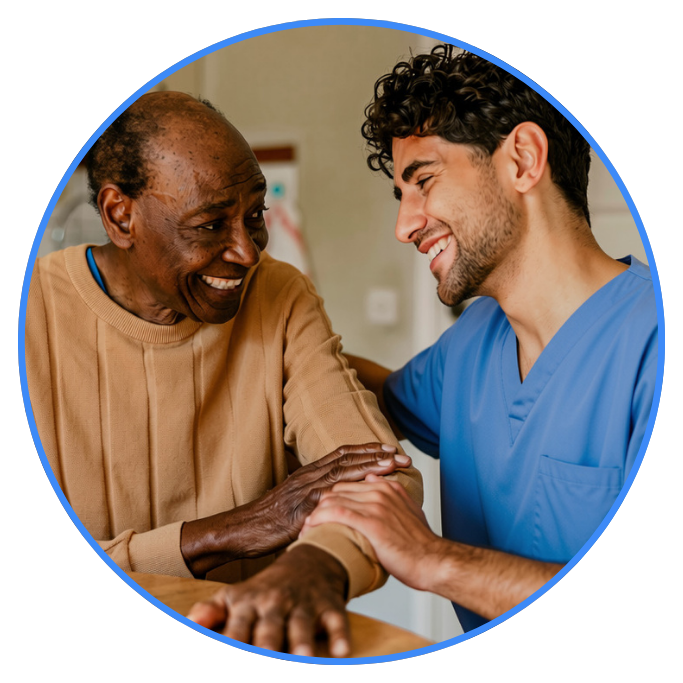
Direct care workers play a central role in supporting older adults and people with disabilities to live safely in their home and communities. This initiative brings together state agencies and healthcare partners to strengthen that workforce through a more consistent, structured approach to training and career development.
Led in partnership with the Illinois Department of Aging and Rush University Medical Center, the project focuses on aligning training, improving support for workers, and creating clearer pathways for advancement across home and community-based services.
Why This Matters
Demand for in-home care continues to increase as Illinois’ population ages and more individuals choose to remain in their homes and in their communities. At the same time, providers face ongoing challenges recruiting and retaining direct care workers.
Many workers enter the field without consistent training, receive limited on-the-job support, and have few opportunities to advance. High turnover rates, often within the first year, disrupt care stability and places additional strain on the system.
Without a more coordinated approach, these challenges will continue to impact both the workforce and the individuals who rely on their care.

Our Approach

1. Standardized Training
A core curriculum is being developed to ensure all direct care workers receive consistent, high-quality training. The curriculum emphasizes both technical skills and person-centered care, and is designed for flexible delivery through online and print formats.

2. Mentorship and Support
New workers are supported through structured mentorship and ongoing learning opportunities, helping build confidence and improve job satisfaction.
3. Career Pathways
A microcredential system is being designed to recognize skills and create opportunities for advancement. These pathways allow workers to specialize, take on expanding roles, and pursue future careers in fields such as nursing, social work, and care coordination.
How It Works

Engagement and Input
Focus groups, surveys, and listening sessions with direct care workers, supervisors, participants, and employers.
Collaboration with state agencies and community partners.

Curriculum Development
Identification of core competencies and key training topics.
Development of content across knowledge and skill areas. Creation of accessible learning formats.

Testing and Refinement
Pilot testing with providers and learners. Feedback collection and revisions.
Implementation
Integration into statewide learning systems. Expansion across home and community-based service programs.

Evaluation
Ongoing assessment of outcomes. Adjustments to improve effectiveness and sustainability.
How It Works
Engagement and Input
Focus groups, surveys, and listening sessions with direct care workers, supervisors, participants, and employers.
Collaboration with state agencies and community partners.
Curriculum Development
Identification of core competencies and key training topics.
Development of content across knowledge and skill areas. Creation of accessible learning formats.
Testing and Refinement
Pilot testing with providers and learners. Feedback collection and revisions.
Implementation
Integration into statewide learning systems. Expansion across home and community-based service programs.
Evaluation
Ongoing assessment of outcomes. Adjustments to improve effectiveness and sustainability.